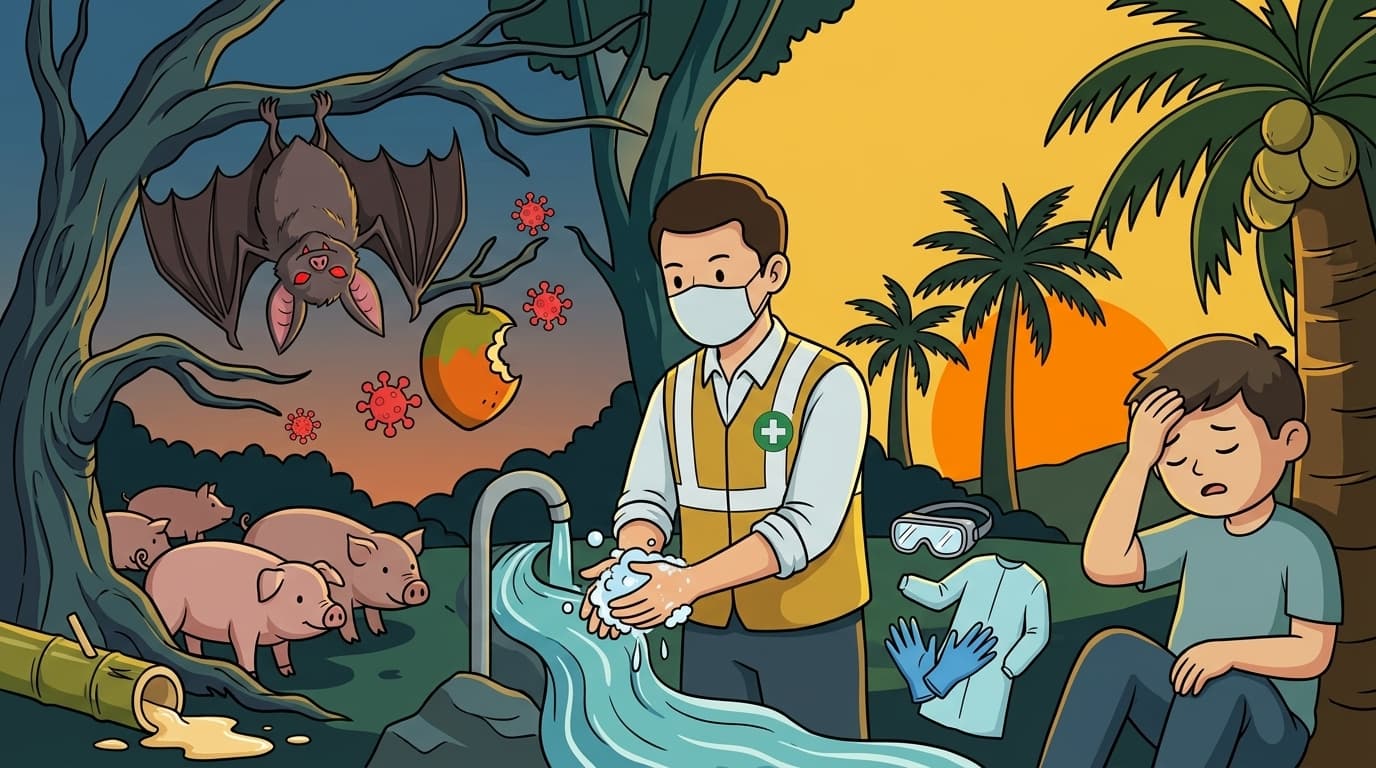
Nipah Virus (NiV) is a zoonotic disease caused by the Nipah virus, which can be transmitted from animals to humans. The virus was first identified in 1998 during an outbreak among pig farmers in Malaysia. It can spread through direct contact with infected animals, especially fruit bats and pigs, consumption of contaminated food, or close contact between infected people.
Nipah Virus is a global health concern due to its high case fatality rate, estimated at 40% to 75% according to WHO. Several outbreaks have been reported in Malaysia, Singapore, India, Bangladesh, and the Philippines. The virus can cause serious health problems, ranging from mild symptoms to severe brain infection (encephalitis) that may become life-threatening.
Common symptoms of Nipah Virus infection include fever, headache, cough, sore throat, and breathing difficulties. In severe cases, patients may develop brain inflammation characterized by confusion, drowsiness, seizures, and rapid loss of consciousness.
Prevention is the most important step to reduce the risk of Nipah Virus transmission. People should maintain good hygiene practices, such as washing hands regularly with soap and running water, avoiding direct contact with sick animals, and ensuring that fruits and food products are properly washed or cooked before consumption. Personal protective equipment (PPE) should also be used by healthcare workers or caregivers handling suspected infected patients.
Currently, there is no specific antiviral treatment available for Nipah Virus infection. Management focuses on supportive care, including maintaining hydration, controlling fever, managing respiratory symptoms, and monitoring neurological conditions. Early isolation and medical consultation are essential to prevent further transmission.
Recognize the risks, prevent the spread, and protect yourself from Nipah Virus by practicing healthy habits and staying alert to potential sources of infection.