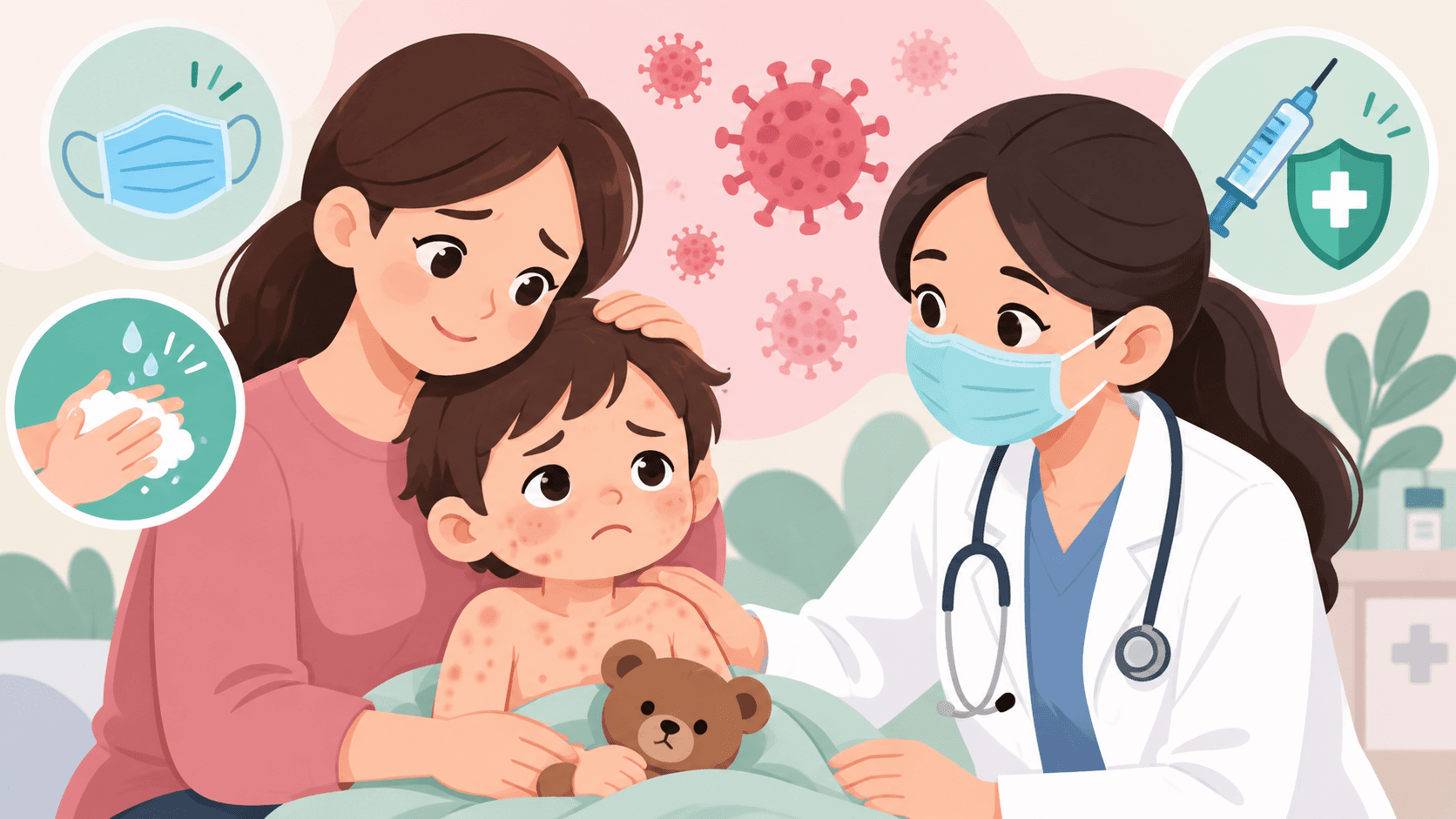
Measles is a highly contagious disease caused by the measles virus. The disease spreads easily through respiratory droplets released when an infected person coughs or sneezes, direct contact with an infected individual, and staying in the same room with someone who has measles. The measles virus can remain in the air for a period of time, making transmission highly possible.
Recognizing the symptoms of measles early is important to ensure proper treatment. Common symptoms include high fever, runny nose and nasal congestion, red and watery eyes, cough, a red skin rash that usually starts on the face and spreads throughout the body, and general weakness or fatigue.
Measles can lead to serious complications, especially among vulnerable groups such as children. Possible complications include lung infection (pneumonia), inflammation of the brain (encephalitis), ear infection, and even death in severe cases.
Measles prevention can be achieved through several important measures. The most effective prevention method is completing measles immunization according to the recommended schedule. Other preventive actions include wearing a mask when sick, washing hands regularly with soap, seeking medical care immediately when symptoms appear, and avoiding close contact with people infected with measles.
Medical attention should be sought immediately if a person experiences a high fever lasting more than three days, develops a red skin rash, or if children or adults appear weak and have difficulty eating or drinking.
For individuals who have already contracted measles, it is recommended to get adequate rest, drink plenty of water, consume nutritious food, take medication as advised by healthcare professionals, wear a mask, and avoid contact with others to prevent further transmission.
Measles is a preventable disease through vaccination. Protect yourself, your family, and your community by increasing awareness of measles symptoms, prevention methods, and appropriate actions when infection occurs.