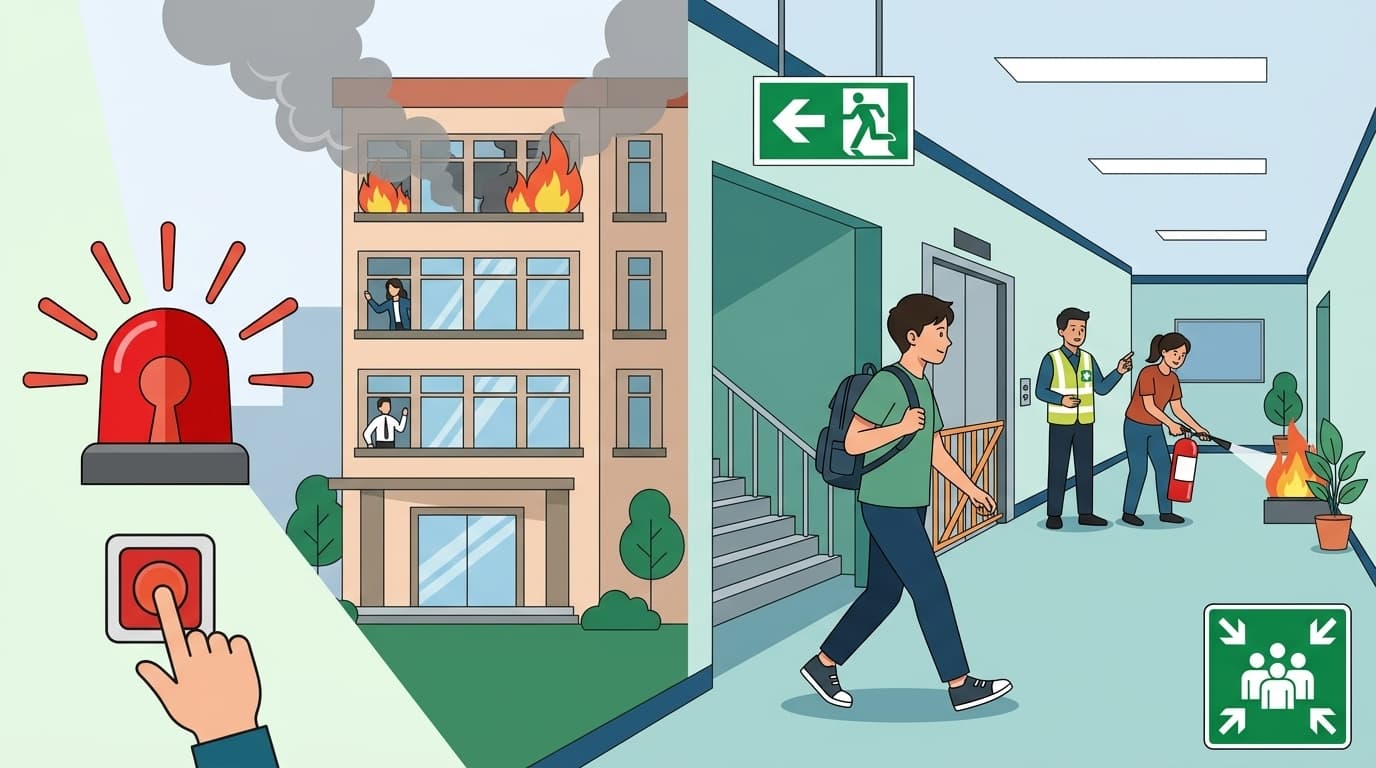
A workplace fire represents a significant potential hazard that can endanger lives and threaten business operations. Individual readiness in managing emergency situations is critical to ensuring the safety of oneself and fellow colleagues. Understanding correct procedures and quick responses during a fire incident is a fundamental requirement for all employees.
Immediate Actions During a Fire
Upon discovering a fire incident, the immediate first step is to initiate detection and alert measures. Press the nearest fire alarm immediately and inform all surrounding colleagues and supervisors so that emergency awareness can be established right away.
Following the alert, proceed with a safe evacuation. Move toward the exits using designated emergency evacuation routes and assemble at the predetermined muster point. During a fire emergency, the use of elevators is strictly prohibited to prevent the risk of getting trapped.
Attempting initial suppression using a Portable Fire Extinguisher (APAR) should only be conducted if conditions are safe and the individual has undergone proper training. When operating an extinguisher, remember the P-A-S-S technique: Pull the safety pin, Aim the nozzle at the base of the fire, Squeeze the lever, and Sweep from side to side.
While evacuating, render assistance to colleagues who require help to ensure everyone exits the dangerous area safely. Once outside, re-entering the fire area is strictly forbidden until clear authorization is given by designated emergency personnel.
The next step involves reporting and coordinating with the Emergency Response Team (ERT) or HSE officers. Provide clear and critical information, including the exact location of the incident, the type of fire involved, and the estimated number of affected individuals.
Safety Keys and Preparedness
To support an effective response during emergency situations, every worker must adhere to several key safety practices. These include knowing the exact locations of fire extinguishers and hydrants in the workspace, actively participating in routine evacuation drills, maintaining composure and discipline, and strictly following instructions provided by the ERT or HSE personnel.
Remember that your safety is the top priority. A swift and correct emergency response prevents injuries and mitigates extensive workplace damage.