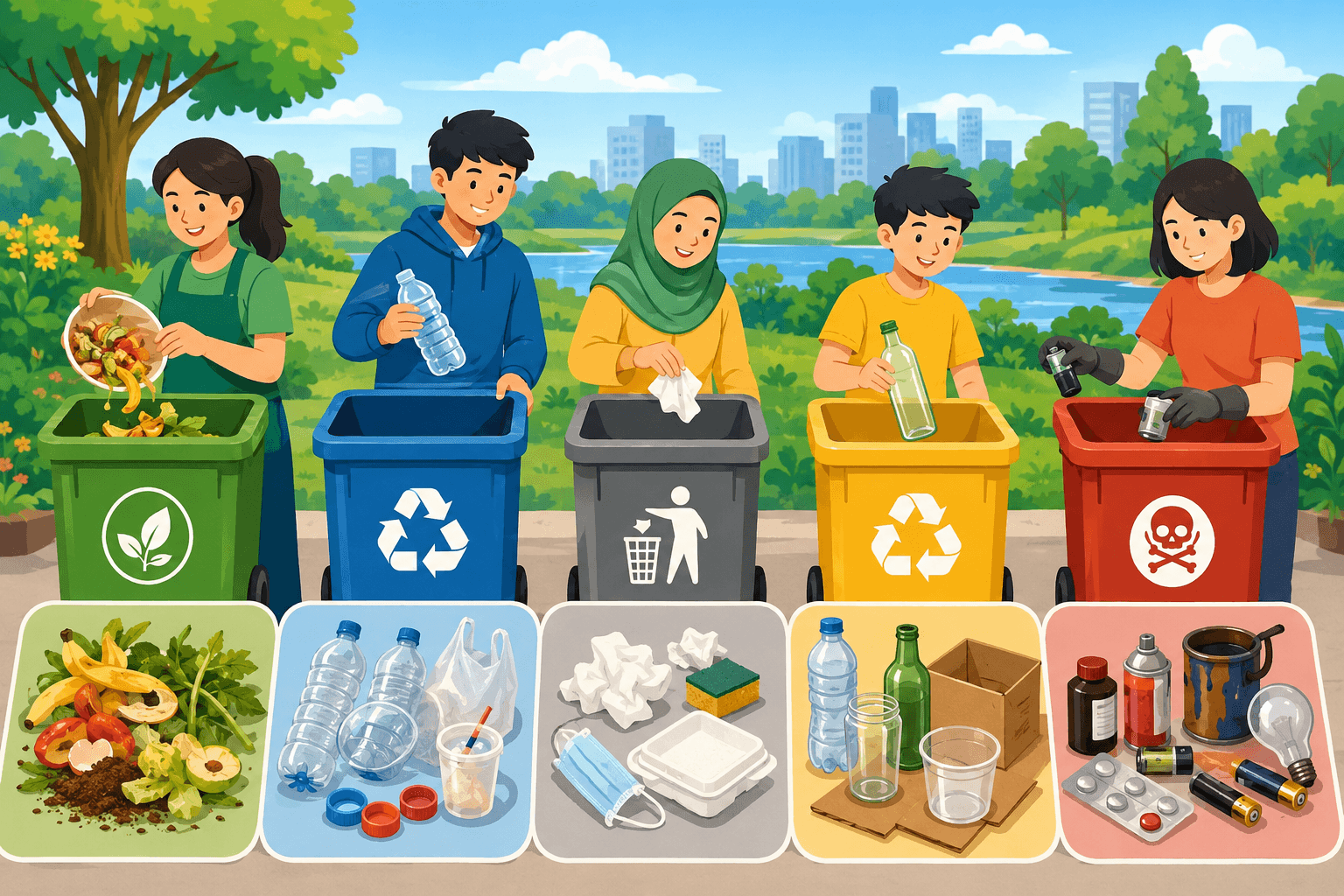
Waste management is one of the most important steps in protecting and preserving the environment. Through the campaign “Let’s Sort Waste Starting Today”, everyone is encouraged to begin separating waste according to its type to reduce pollution and keep our planet clean.
Waste sorting is a simple action that creates a significant impact. By separating waste based on its characteristics, reusable materials can be recycled, while hazardous waste can be handled properly and safely.
Types of Waste and How to Manage Them
1. Organic Waste
Organic waste is waste that can naturally decompose or is biodegradable. This type of waste can be processed into compost, which is beneficial for the environment.
Examples of organic waste:
Food scrapsFruit peelsVegetablesDry leavesCoffee groundsTea leaves
Proper management of organic waste can reduce the amount of waste sent to landfills.
2. Plastic Waste (Inorganic Waste)
Plastic waste is waste made from plastic materials that can still be reused or processed through recycling.
Examples of plastic waste:
Bottled drinking water containersPlastic drink cupsPlastic bottle capsPlastic bags
Plastic waste should be collected separately so it can be recycled into new products and help reduce environmental pollution.
3. Residual Waste
Residual waste is waste that cannot be recycled or composted and requires proper disposal methods.
Examples of residual waste:
Used tissuesUsed masksUsed styrofoamCleaning spongesUsed tape or insulation materials
Reducing residual waste can be done by limiting the use of single-use products.
4. Recyclable Waste
Recyclable waste consists of materials that still have value and can be processed into new products.
Examples of recyclable waste:
Plastic bottlesBottle capsPlastic cupsClear plastic bottlesCardboard
Recycling helps conserve natural resources and reduces the amount of waste accumulated in disposal areas.
5. Hazardous Waste (B3 Waste)
Hazardous waste, also known as B3 waste (Hazardous and Toxic Materials), contains substances that can harm humans and the environment. This type of waste must be managed separately and carefully.
Examples of hazardous waste:
Used batteriesPaint and thinner containersChemical packagingExpired medicinesUsed Personal Protective Equipment (PPE) contaminated with chemicals
Do not mix hazardous waste with regular household waste because it can create health risks and environmental pollution.
Start with Small Steps
Protecting the environment is not only the responsibility of certain groups, but a responsibility shared by everyone. Simple habits such as disposing of waste properly, sorting waste from the source, and reducing the use of single-use plastics can create a major positive change for the Earth.
Don’t mix it, collect it and sort it. If not us, then who?
Let’s work together to protect the environment by making waste sorting a daily habit starting today.