Flooding is a recurring natural hazard, particularly prominent during the rainy season. To enhance safety and minimize the adverse effects, individual and family preparedness is the main key. Understanding proper emergency steps and undertaking sustainable preventive actions are our collective responsibility. This guide re-narrates these practical measures as a reference for facing flood emergencies.
Flood Preparedness Measures
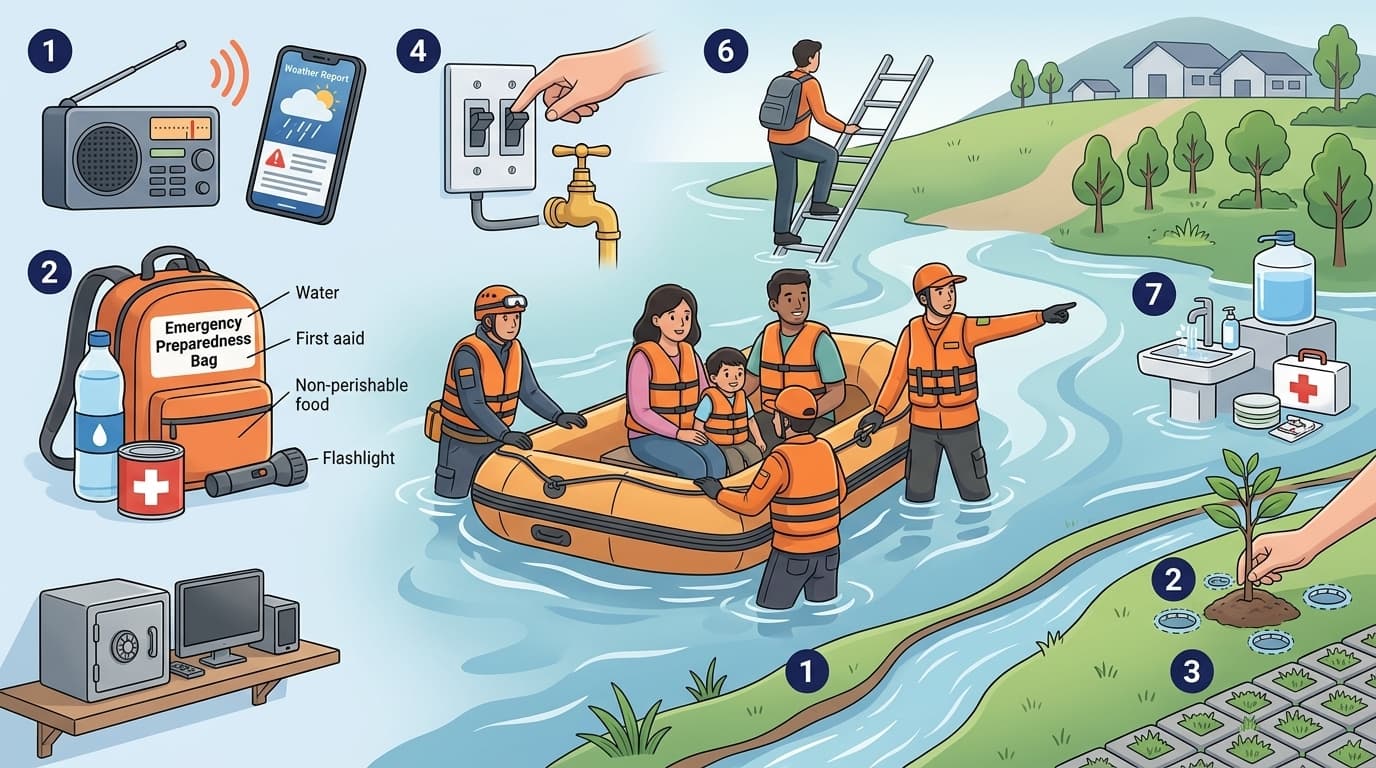
Firstly, access to accurate information is crucial. We must always monitor weather developments and early warnings issued by official institutions such as the Meteorology, Climatology, and Geophysics Agency (BMKG) or the Regional Disaster Management Agency (BPBD). If there is a warning of an imminent flood in your residential area, immediately prepare to evacuate to a safer location.
Secondly, preparing an Emergency Preparedness Bag is highly recommended. This bag should contain essential emergency supplies that are easy to carry during evacuation. Critical items to include are important documents, a sufficient change of clothing, personal medicine supplies, non-perishable food, bottled drinking water, a flashlight with spare batteries, a power bank to keep communication devices operational, and a basic first aid kit.
Actions During the Flood
When water begins to enter residential areas or homes, certain preventive measures must be taken immediately. Prioritize safety by securing valuables, electronic equipment, and important papers in elevated locations or waterproof containers. Additionally, ensure to shut off the electricity and gas supply in the house to prevent potential short circuits that could cause fires.
During an evacuation, high vigilance must be applied, especially when in open areas. We must avoid walking or driving through strong water currents, as even seemingly shallow currents can sweep away humans and vehicles. In urgent situations, use life jackets or other floating objects as safety aids. Do not delay in immediately evacuating to higher ground or designated evacuation locations if the water continues to rise.
Post-Flood Recovery
Safety measures do not stop after the water recedes. Following a flood, health problems often arise due to dirty environments and contaminated water sources. We need to be aware of various infectious diseases such as diarrhea, leptospirosis transmitted through rat urine, and skin infections. It is essential to maintain personal hygiene and ensure that the water consumed is clean and not contaminated by germs.
Flood Prevention Efforts
In addition to preparedness, long-term prevention actions are vital to reduce the risk of future floods. Efforts that can be undertaken independently or jointly in the surrounding environment include keeping gutters and rivers clean of trash, planting trees in the area around the home, and creating absorption wells. The use of water-absorbent paving block materials is recommended over the total paving of land with concrete. Regular drainage maintenance, good waste management, and support for greening and reforestation programs are proactive steps that can yield positive impacts in the long term.
Vigilance is the cornerstone of safety. Being ready, alert, and acting quickly are principles to hold firm when facing a flood.